The Socotra Bottle Tree is one of the island’s most unusual plants and one of the most beautiful sights to look for on a Socotra nature tour.
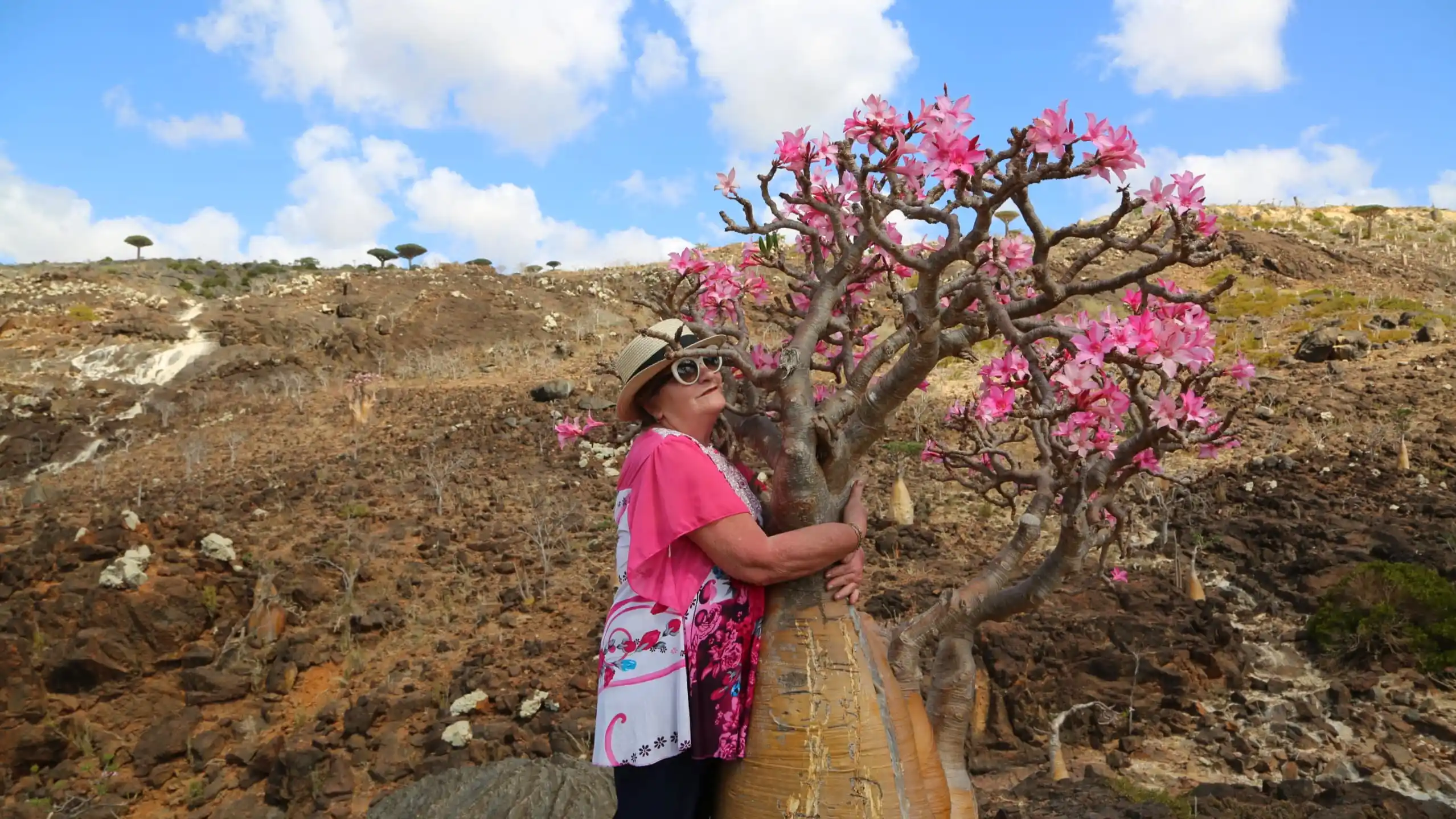
Also called the Socotra Desert Rose, this plant is known for its swollen trunk, sculptural shape and seasonal pink flowers. It grows in dry, rocky landscapes and is often seen around Homhil, Diksam and other highland routes, depending on the itinerary and season.
For many travelers, the Bottle Tree is the second most recognizable plant in Socotra after the Dragon Blood Tree. The two are completely different, but together they explain why Socotra is famous for plants found nowhere else in the world.
This guide explains what the Socotra Bottle Tree is, where to see it, when it blooms, how it differs from the Dragon Blood Tree and how to visit these landscapes responsibly.
Quick Facts About the Socotra Bottle Tree
Common names: Socotra Bottle Tree, Socotra Desert Rose.
Scientific names used in travel and plant references: Adenium socotranum, Adenium obesum subsp. socotranum, and Adenium obesum.
Main places to see it: Homhil Protected Area, Diksam Plateau, highland routes and selected rocky landscapes.
Best feature: a swollen bottle-shaped trunk with seasonal pink flowers.
Best time for flowers: often around late winter to spring, especially February to April, but flowering depends on rainfall and conditions.
Good for: nature photography, Socotra plant tours, highland walks and island biodiversity interest.
What Is the Socotra Bottle Tree?

The Socotra Bottle Tree is a drought-adapted plant famous for its thick swollen trunk.
Its shape helps it survive in dry island conditions by storing water. Mature plants can look almost sculptural, with a wide base, pale bark and branches that may carry bright pink flowers during the blooming season.
The plant is commonly called the Desert Rose because of its flowers. It is called a Bottle Tree because the lower trunk can look rounded and swollen, especially in older specimens.
Scientific naming can be confusing. Many travel pages and plant references use the name Adenium socotranum or Adenium obesum subsp. socotranum. Kew currently treats Adenium socotranum as a synonym of Adenium obesum, so this article uses the common names Socotra Bottle Tree and Socotra Desert Rose for travelers.
Why Is It Called the Desert Rose?
The name Desert Rose comes from the plant’s flowers.
When in bloom, the Socotra Bottle Tree can produce pink flowers that stand out strongly against dry rocks, pale trunks and open landscapes. The contrast is one of the reasons the plant is so photogenic.
The flowers are not guaranteed on every trip. Blooming depends on season, rainfall, plant condition and local weather. Some travelers may see many flowering trees, while others may see mostly the swollen trunks and sculptural forms.
Even without flowers, the Bottle Tree is worth noticing. Its shape is part of Socotra’s visual identity and shows how plants have adapted to harsh island conditions.
Where to See Bottle Trees in Socotra
Travelers can see Bottle Trees in several parts of Socotra, especially in rocky highland and protected landscapes.
The most useful places for visitors are Homhil Protected Area and the Diksam highland routes. Depending on the program, travelers may also see Bottle Trees near valleys, slopes and other dry areas during drives and short walks.
A good Socotra itinerary should not treat Bottle Trees as a single photo stop. They are part of the wider landscape. The best experience comes from seeing them together with Dragon Blood Trees, frankincense, limestone plateaus, sea views and local walking routes.
Homhil Protected Area
Homhil is one of the best places to see the Socotra Bottle Tree.
The area combines Bottle Trees, Dragon Blood Trees, frankincense, rocky paths and wide views toward the northern coast. A walk through Homhil gives travelers a strong introduction to Socotra’s plant life in one compact landscape.
Bottle Trees in Homhil are especially good for photography because they can be seen beside rocks, slopes, other endemic plants and open views. During the flowering season, pink blossoms add strong color to the highland scenery.
Homhil is usually visited as part of a wider Socotra route that may also include Dihamri, Arher or the eastern side of the island, depending on the itinerary.
Diksam and the Highland Routes
Diksam is better known for Dragon Blood Trees, but the wider highland routes can also include Bottle Trees and other Socotra plants.
This makes Diksam useful for travelers who want to understand the island’s plant diversity, not only photograph one famous tree. The landscape changes between plateaus, valleys, rocky ground and viewpoints, so the plant experience feels different from Homhil.
On some routes, travelers may see Bottle Trees while driving between main sites or during short walks. The exact experience depends on the final program, weather and local route conditions.
Diksam and Homhil work well together because they show two different parts of Socotra’s highland nature.
When Do Socotra Bottle Trees Bloom?
The Socotra Bottle Tree often blooms around late winter and spring, especially from February to April.
This timing can be excellent for photography because the pink flowers add color to the dry landscape. However, flowering is natural and cannot be guaranteed. Rainfall, temperature and local conditions can affect when flowers appear and how long they last.
Travelers who want the best chance of seeing flowers should ask about timing before booking, but they should also plan the trip around the full Socotra experience. Even outside peak flowering, the Bottle Tree’s shape remains impressive.
For seasonal planning, travelers should also check the Best Time to Visit Socotra Guide before choosing dates.
Bottle Tree vs Dragon Blood Tree

The Bottle Tree and the Dragon Blood Tree are two different plants.
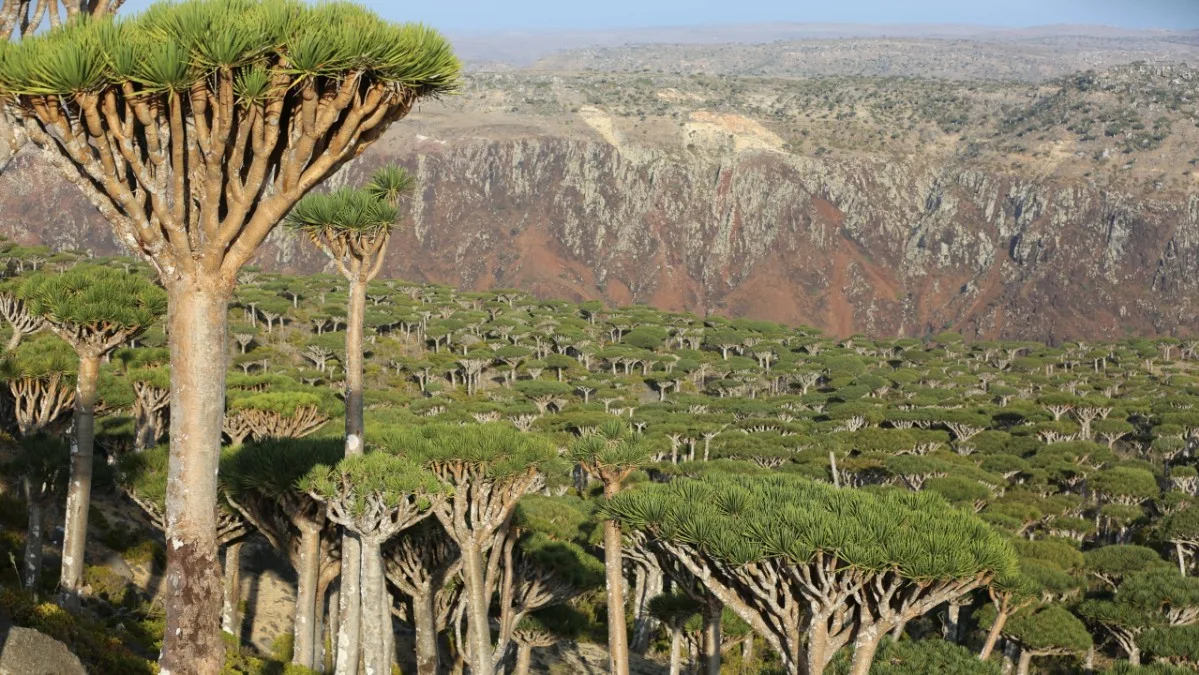
The Dragon Blood Tree has an umbrella-shaped crown, branching structure and red resin. It is usually associated with Diksam Plateau, Firmihin Forest and highland landscapes.
The Bottle Tree has a swollen trunk and pink flowers. It is often associated with Homhil, Diksam routes and rocky dry areas.
Both plants are important to Socotra’s identity, but they create different visual experiences. Dragon Blood Trees give the island its famous umbrella-tree skyline. Bottle Trees add sculptural trunks and seasonal color.
Seeing both helps travelers understand why Socotra is more than a beach destination. Its plant life is one of the main reasons the island is globally important.
Photography Tips
The Socotra Bottle Tree is excellent for photography, especially when flowers are present.
Early morning and late afternoon usually give softer light and better texture on the trunk. Homhil can be especially useful because trees, rocks, paths and coastal views can be combined in one frame.
Good photo subjects include the swollen trunk, pink flowers, Bottle Trees beside Dragon Blood Trees, close details of branches and flowers, and wider landscape views showing the plant in its natural setting.
Travelers should avoid damaging the plant for a photograph. Do not pull branches, pick flowers, climb on trunks or step on exposed roots. The best images should show the tree naturally, without disturbing it.
How to Visit Responsibly
Socotra’s plant landscapes are fragile.
Visitors should stay on suitable paths where possible, follow guide instructions and avoid damaging plants, seedlings or roots. Flowers, seeds, branches and bark should not be collected as souvenirs.
Travelers should also avoid carving names into trunks, climbing trees or moving stones around plants for staged photos.
Responsible travel is especially important in places such as Homhil and Diksam because these areas are part of the island’s natural identity. Tourism should help people value Socotra’s plants, not damage them.
How the Bottle Tree Fits Into an 8-Day Socotra Itinerary
The Socotra Bottle Tree fits naturally into a standard 8-day Socotra itinerary.
Travelers may see it during the Homhil visit, along highland routes, or while moving between major natural sites. It pairs well with Dragon Blood Trees, Dihamri Marine Protected Area, Arher Beach, Hoq Cave, Diksam Plateau and other parts of the island route.
The exact day depends on the final itinerary and local conditions. Socotra tours often need flexibility because weather, roads, sea conditions and campsite arrangements can change.
Travelers who are especially interested in plants or photography can request more time in Homhil, Diksam and other nature areas during a private Socotra tour.
Plan a Socotra Nature Tour with TourYemen
The Socotra Bottle Tree is one of the island’s most memorable plants.
Its swollen trunk, pink flowers and rocky natural setting make it a highlight for travelers interested in photography, landscapes and endemic plants. Together with the Dragon Blood Tree, it helps explain why Socotra’s nature is unlike anywhere else.
TourYemen arranges Socotra group tours and private tours that include the island’s main natural landscapes, including Homhil, Diksam, Dragon Blood Tree areas, beaches, caves, dunes, lagoons and marine protected areas.
The final route is planned around confirmed flights, weather, walking ability, accommodation style and traveler interests.
Contact TourYemen to plan a Socotra itinerary that includes the Bottle Tree, Dragon Blood Trees and the island’s most important natural landscapes.