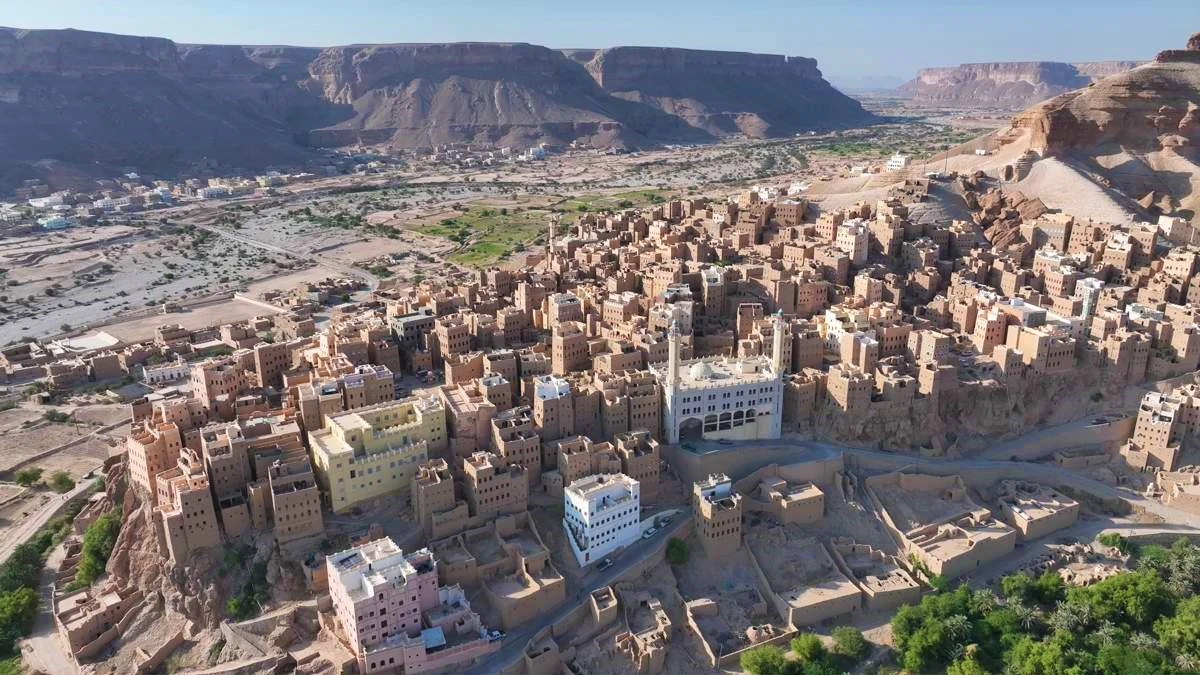
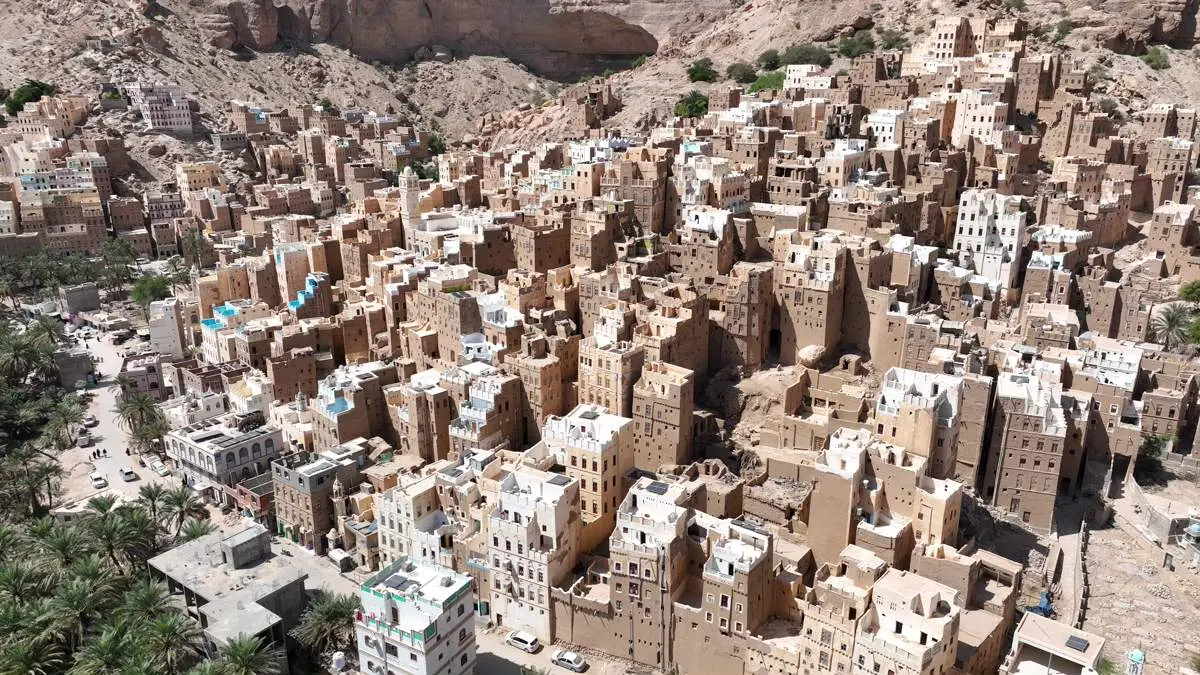
A six-day Mainland Yemen itinerary gives first-time visitors enough time to experience historic mud-brick cities, Islamic heritage, dramatic valleys, traditional villages and the Arabian Sea coast without turning the journey into a rushed checklist.
For most international travelers, one of the strongest routes begins with arrival at Seiyun Airport and continues through Hawta, Seiyun, Tarim, Aynat, Prophet Hud, Shibam and Wadi Doan before ending in Mukalla.
The journey brings together several different sides of Hadhramaut. Seiyun introduces the palace architecture and everyday life of Wadi Hadhramaut. Tarim adds historic mosques, scholarly traditions and spiritual heritage. Shibam provides the route’s most iconic mud-brick skyline. Wadi Doan adds traditional villages and dramatic mountain scenery, while Mukalla completes the itinerary beside the Arabian Sea.
At TourYemen, we recommend this route because it follows a practical one-way journey from Seiyun Airport to Mukalla Airport while giving each day a clear theme.
It is especially suitable for travelers looking for a Yemen heritage tour focused on architecture, local culture, historic cities and traditional landscapes.
Is Six Days Enough for Mainland Yemen?
Six days is enough for a well-planned first journey through Hadhramaut and Mukalla.
A six-day itinerary can include Seiyun, Tarim, Aynat, Prophet Hud, Shibam, Wadi Doan and Mukalla while still allowing time for viewpoints, local markets, historic buildings, traditional villages and coastal experiences.
The first day is kept light because it is mainly an arrival and transfer day. The main sightseeing begins on Day 2, while Days 3 and 4 provide enough time for Shibam and Wadi Doan without reducing either destination to a quick stop.
A shorter itinerary may require travelers to remove Mukalla, reduce their time in Wadi Doan or move too quickly between the main heritage sites.
A longer Yemen private tour can provide additional time for photography, village visits, cultural experiences and a slower stay on the coast.
For travelers arriving at Seiyun Airport and departing from Mukalla Airport, six days provides one of the best balances between travel time, destination variety and practical route flow.
6-Day Mainland Yemen Itinerary at a Glance
Day 1
Fly from Cairo to Seiyun, meet the TourYemen team at Seiyun Airport, transfer to Hawta Palace Hotel and enjoy sunset views overlooking Shibam’s mud-brick skyline.
Day 2
Explore Seiyun, visit Sultan Al Kathiri Palace and the local market, then continue to Tarim, Aynat and Prophet Hud before returning to Hawta.
Day 3
Explore the Old Walled City of Shibam, visit a traditional tower house, continue through Al-Hajarayn and check in at Hayd Al Jazeel Resort in Wadi Doan.
Day 4
Spend a full day exploring Wadi Doan, including Hawfah village, Hayd Al Jazeel, Buqshan Palace, Al-Khuraybah and Al-Rubat.
Day 5
Travel from Wadi Doan to Mukalla, visit the Qu’aiti Sultan Palace and Museum, Mukalla Fish Market and Al-Ghwayzi Fortress, then enjoy a sunset boat trip.
Day 6
Transfer to Mukalla Airport and fly to Cairo.
The route begins in the historic cities of Wadi Hadhramaut, crosses the dramatic landscapes of Wadi Doan and ends beside the Arabian Sea.
This progression is one of the main reasons the itinerary feels varied even within a relatively short six-day journey.
Day 1 — Cairo to Seiyun and Transfer to Hawta
The Mainland Yemen journey begins with a Yemenia Airways flight from Cairo to Seiyun.
After arriving at Seiyun Airport and completing entry formalities, travelers meet the TourYemen team and transfer directly to Hawta Palace Hotel.
Day 1 is primarily an arrival and transfer day. There is no scheduled sightseeing program in Seiyun city.
After checking in at Hawta Palace Hotel, travelers have time to rest following the flight and prepare for the main itinerary.
If the flight arrives on schedule and enough daylight remains, the day includes a light introduction to the area and sunset views from a viewpoint overlooking Shibam’s famous mud-brick skyline.
The viewpoint provides a panoramic first impression of the Old Walled City of Shibam rising from the floor of Wadi Hadhramaut.
The complete walking visit inside Shibam takes place on Day 3.
Dinner and overnight are at Hawta Palace Hotel.
Why Day 1 Is Kept Light
International travelers need time to complete airport procedures, collect their luggage, meet the local team and transfer to Hawta.
Keeping the program light allows the journey to begin comfortably rather than adding a demanding sightseeing schedule immediately after the flight.
The Shibam viewpoint still gives travelers a memorable first experience of Hadhramaut and creates anticipation for the detailed visit later in the itinerary.
Why Visit the Shibam Viewpoint on Arrival Day?
The exterior viewpoint shows Shibam as a complete skyline and helps travelers understand the city’s position within Wadi Hadhramaut.
This panoramic perspective is very different from walking through the narrow streets inside the old city.
Seeing the skyline on Day 1 and exploring Shibam in detail on Day 3 provides two complementary experiences.
TourYemen Advice for Day 1
The viewpoint visit depends on the actual flight arrival, the completion of airport procedures and the remaining daylight.
Travelers should treat the sunset stop as a relaxed introduction rather than a full sightseeing program.
The priority on Day 1 is a smooth arrival, transfer to Hawta Palace Hotel and sufficient rest before the main itinerary begins.
Day 2 — Seiyun, Tarim, Aynat and Prophet Hud
After breakfast at Hawta Palace Hotel, the second day begins with a drive to Seiyun.
Seiyun is often viewed mainly as an arrival city, but it has important heritage sites of its own.
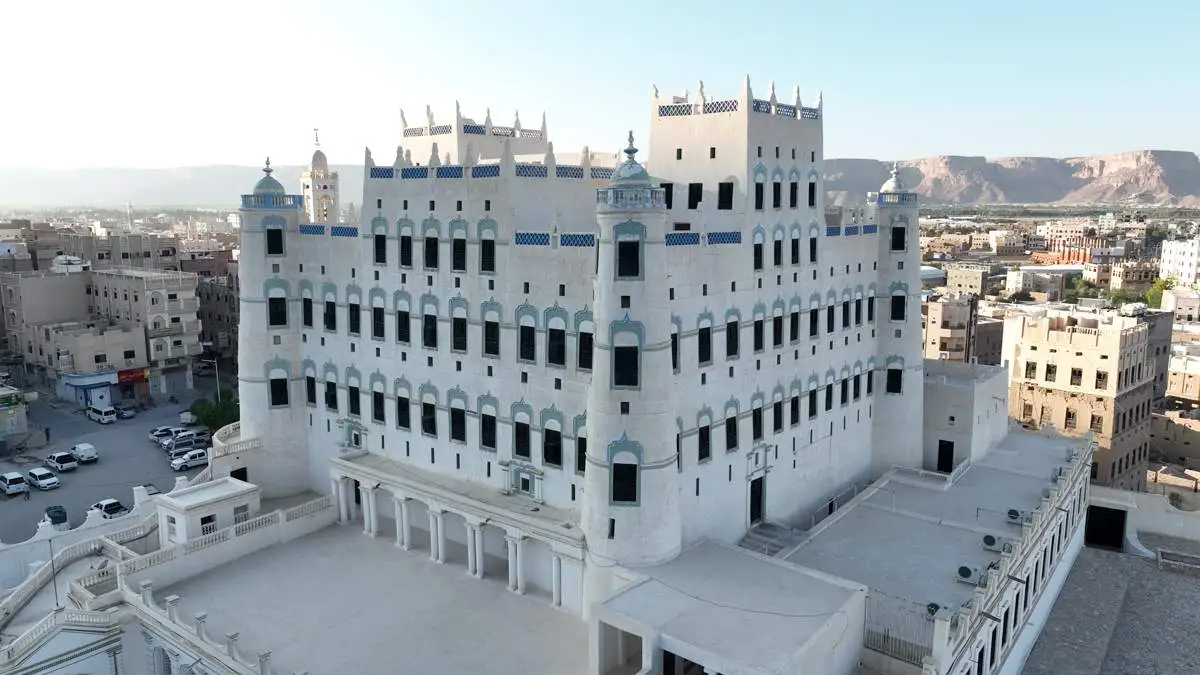
The first major visit is Sultan Al Kathiri Palace, also commonly known as Seiyun Palace.
The large white mud-brick palace stands in the center of the city and is one of the most recognizable landmarks in Wadi Hadhramaut.
A visit to the palace and museum provides an introduction to the history of the Kathiri Sultanate, local architecture and the political heritage of the valley.
The itinerary also includes Seiyun local market, where travelers can experience everyday life and see a different side of the city beyond its main monument.
After Seiyun, the journey continues to Tarim, one of Hadhramaut’s most historic and spiritual cities.
Tarim is known for its mosques, Islamic scholarship, mud-brick palaces and long-standing cultural connections with Hadhrami communities across India, Indonesia, Singapore and other parts of Southeast Asia.
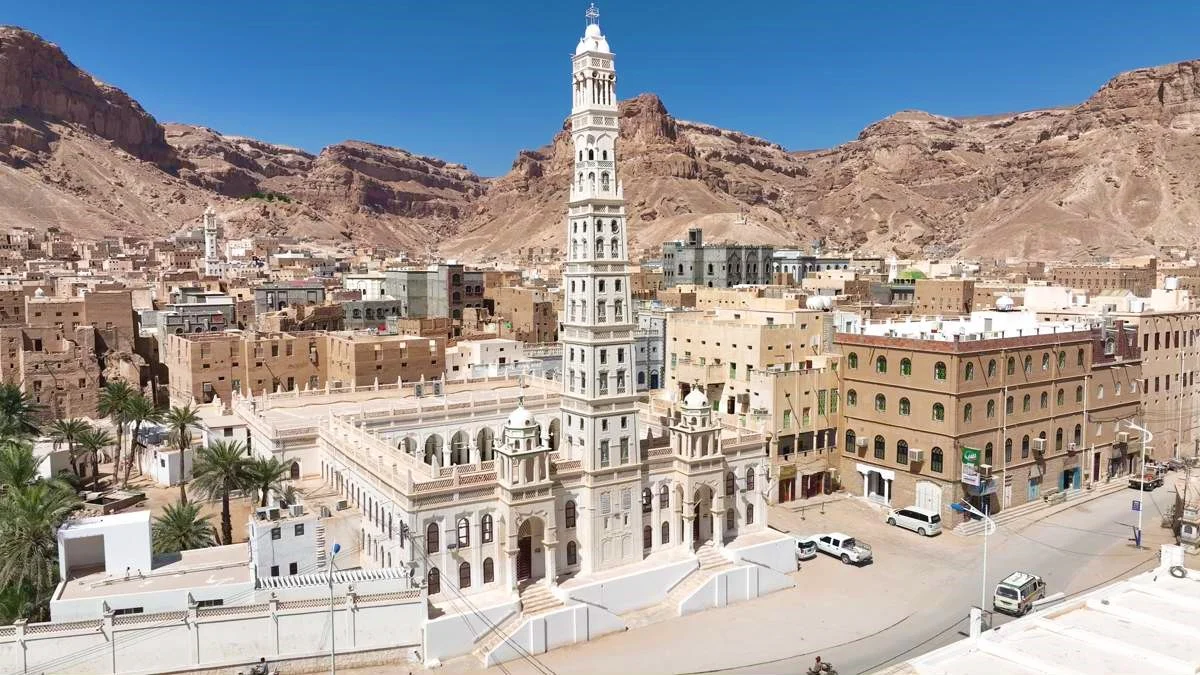
The city’s most recognizable landmark is Al-Muhdhar Mosque and its tall mud-brick minaret, one of the best-known architectural symbols of Hadhramaut.
The minaret rises above the surrounding city and reflects Tarim’s importance as a spiritual and intellectual center of Wadi Hadhramaut.
After Tarim, the journey continues east to Aynat.
Aynat is known for the Seven Domes, a distinctive group of domed tombs connected with the religious and architectural heritage of the region.
The final major visit is the traditional Tomb of Prophet Hud, one of Hadhramaut’s most important religious destinations and a place associated with long-standing pilgrimage traditions.
After completing the visits, travelers return to Hawta Palace Hotel for dinner and an overnight stay.
Why Day 2 Works
The second day combines the political, urban and religious history of Wadi Hadhramaut.
Seiyun introduces the palace history of the valley and its local market.
Tarim adds mosque architecture, scholarship and spiritual traditions.
Aynat and Prophet Hud expand the religious journey beyond the main cities.
What Makes Seiyun and Tarim Different?
Seiyun is defined by Sultan Al Kathiri Palace, its market and its role as a practical gateway to the valley.
Tarim has a broader religious and scholarly identity based on mosques, education, historic neighborhoods and long connections with the Indian Ocean world.
Including both cities on the same day allows travelers to experience two different sides of Hadhrami heritage.
TourYemen Advice for Day 2
Do not treat Tarim only as a quick photography stop at the Al-Muhdhar Mosque minaret.
The city becomes more meaningful when visitors understand its scholarly history and cultural connections with Hadhrami communities abroad.
The visit to Seiyun Palace and the local market also helps travelers understand the region before continuing east toward Aynat and Prophet Hud.
Day 3 — Explore Shibam and Continue to Wadi Doan
After breakfast, travelers drive to Shibam, the most internationally recognized destination in Hadhramaut.
The Old Walled City of Shibam is listed as a UNESCO World Heritage Site and is famous for its dense collection of tall mud-brick tower houses.
The city rises dramatically from the floor of Wadi Hadhramaut, creating one of the most distinctive historic skylines in the Arabian Peninsula.
Shibam is often called the Manhattan of the Desert because of its vertical architecture.
However, the city is much more than an exterior skyline.
Walking inside the walls reveals narrow streets, shaded passages, traditional doors, local shops and the lower levels of the tower houses.
The itinerary includes a visit inside one of the traditional tower houses, with access to the rooftop when available.
This provides a closer look at how families used the different floors and how the buildings were adapted to the climate and social life of the valley.
Travelers also have free time to browse local antique and handicraft shops.
After the Shibam visit, the journey continues toward Wadi Doan.
The route stops at Al-Hajarayn, a historic mud-brick village built within a dramatic rocky landscape.
Al-Hajarayn provides an important transition between the historic city environment of Shibam and the more rural mountain scenery of Wadi Doan.
The day ends with arrival at Hayd Al Jazeel Resort, where travelers check in and spend the night overlooking one of the valley’s most remarkable village landscapes.
Why Shibam Deserves More Than a Viewpoint
The Day 1 viewpoint presents Shibam as a complete skyline.
The Day 3 visit explains how the city functions from the inside.
Travelers need time to walk through its streets, observe architectural details and understand the relationship between the tower houses, walls and surrounding agricultural landscape.
Why Include Al-Hajarayn on Day 3?
Al-Hajarayn lies naturally along the route from Shibam toward Wadi Doan.
Its mud-brick architecture and dramatic setting make it an ideal introduction to the villages of the valley.
The stop also breaks the journey and helps travelers see how the architectural style changes as the route moves away from Wadi Hadhramaut.
TourYemen Advice for Day 3
Allow enough time inside Shibam rather than treating it as a brief photo stop.
The tower-house visit and rooftop view add important context to the famous exterior skyline.
Arrival at Hayd Al Jazeel Resort should also take place with enough daylight for travelers to appreciate the surrounding valley views.
Day 4 — Explore Wadi Doan
Day 4 is dedicated entirely to Wadi Doan. The day begins with breakfast overlooking the valley, followed by a scenic downhill walk toward Hawfah village.The walk provides a closer view of the valley’s terrain, agricultural areas and traditional settlement patterns.
Travelers then explore Hayd Al Jazeel, one of the most striking villages in Hadhramaut.
Its mud-brick buildings stand on a rocky outcrop above the valley, creating one of the region’s most recognizable views.
The itinerary also includes Buqshan Palace, one of Wadi Doan’s most colorful and distinctive architectural landmarks.
The palace represents another side of Hadhrami history and reflects the wealth and international connections of prominent merchant families.
The journey continues to Al-Khuraybah and then to Al-Rubat, one of the historic villages of Wadi Doan.
Together, these villages help travelers understand that Wadi Doan is not defined by one viewpoint or one settlement.
Its importance comes from the combination of architecture, agriculture, mountain scenery and living village communities spread throughout the valley.
At the end of the day, travelers return to Hayd Al Jazeel Resort for an overnight stay.
Why Wadi Doan Deserves a Full Day
Wadi Doan should not be reduced to a drive between named attractions.
The valley itself is one of the main experiences.
Its mountain layers, roadside viewpoints, villages and agricultural areas change continuously throughout the day.
A full day allows enough time for walking, photography, palace visits and slower exploration.
Photography in Wadi Doan
Some of the strongest photographs are taken between the main named stops.
Village skylines, rocky cliffs, agricultural terraces and changing afternoon light often provide more memorable images than a single landmark.
Hayd Al Jazeel is especially strong for wide landscape photography, while the smaller villages provide closer architectural details.
TourYemen Advice for Day 4
Travelers should wear comfortable walking shoes for the downhill walk and village visits.
Do not rush directly from one attraction to another.
Allow time for viewpoints, local interaction and unexpected photography stops because the changing landscape is one of the main reasons Wadi Doan is so memorable.
Day 5 — Travel from Wadi Doan to Mukalla
After an early breakfast, travelers depart Wadi Doan and begin the drive toward the coastal city of Mukalla.
The journey creates one of the strongest visual transitions in the itinerary.
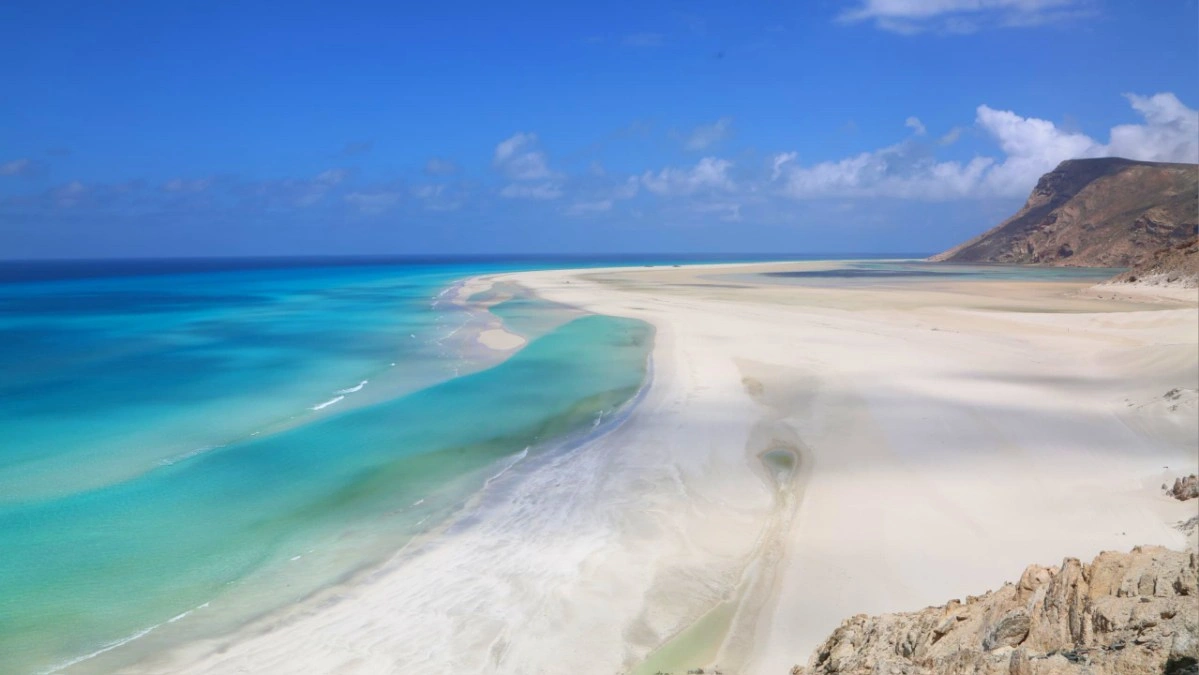
After several days among inland cities, mud-brick villages and mountain valleys, the route gradually approaches the Arabian Sea.
On arrival in Mukalla, the sightseeing program begins with the Qu’aiti Sultan Palace and Museum.
The palace is one of Mukalla’s most important historic landmarks and reflects the political history of the Qu’aiti Sultanate.
The itinerary also includes Mukalla Fish Market, where the city’s maritime identity becomes immediately visible.
The market provides a lively contrast with the quiet villages and historic cities visited earlier in the journey.
Travelers then visit Al-Ghwayzi Fortress, one of Mukalla’s best-known historic sites.
The fortress stands as an example of the defensive architecture associated with the coastal route and provides another perspective on the city’s history.
The day ends with a sunset boat trip along the coast.
From the water, travelers can enjoy views of Mukalla, its coastline and the changing colors over the Arabian Sea.
Dinner and overnight are at Ramada Al Mukalla Resort.
Why the Transition to Mukalla Matters
The journey from Wadi Doan to Mukalla gives the itinerary a clear sense of progression.
The inland cities introduce history and architecture.
Wadi Doan adds mountain landscapes and villages.
Mukalla completes the route with sea views, port history and coastal urban life.
This contrast is one of the main reasons the six-day journey feels complete.
Why Mukalla Is More Than a Departure City
Mukalla is not included only because it has an airport.
The city adds maritime history, markets, palaces, fortresses and Arabian Sea scenery that are completely different from the inland valley.
Ending the trip in Mukalla allows travelers to experience both the valley and coastal identities of Hadhramaut.
TourYemen Advice for Day 5
The drive from Wadi Doan to Mukalla is one of the longer overland sections of the itinerary.
Comfortable transport, planned stops and reliable local coordination are important.
The sunset boat trip remains subject to local sea conditions, weather and operational arrangements.
Day 6 — Depart from Mukalla to Cairo
After breakfast, travelers transfer from the hotel in Mukalla to Mukalla Airport.
The return journey to Cairo is operated by Yemenia Airways.
Day 6 is a departure day and does not include a full sightseeing program.
The airport transfer and flight complete the Mainland Yemen Heritage Tour through Hadhramaut and Mukalla.
Flight schedules may change, so travelers should keep their onward international connections flexible until the Yemenia Airways booking is confirmed.
Why Day 6 Is Kept for Departure
Keeping Day 6 focused on the airport transfer reduces the risk of a rushed final morning.
The main Mukalla sightseeing takes place on Day 5, allowing travelers to enjoy the city without worrying about airport timing.
TourYemen Advice for Day 6
Do not book a tight international connection from Cairo immediately after the Yemenia Airways flight.
Schedules can change, and sufficient connection time should be allowed.
Travelers should confirm all flight details with TourYemen before finalizing international arrangements.
Why This Mainland Yemen Route Works
The itinerary follows a logical geographic and cultural progression.
Seiyun Airport provides the main arrival point into Wadi Hadhramaut.
Hawta Palace Hotel offers a comfortable first base after arrival.
The Shibam sunset viewpoint provides an immediate visual introduction without overloading Day 1.
Seiyun adds palace architecture and the local market.
Tarim introduces the route’s mosque architecture, scholarly traditions and spiritual heritage.
Aynat and Prophet Hud expand the religious journey.
Shibam provides the itinerary’s strongest UNESCO heritage experience.
Al-Hajarayn marks the transition into Wadi Doan.
Wadi Doan adds traditional villages, palaces, walking experiences and dramatic valley scenery.
Mukalla completes the journey with maritime history, markets and the Arabian Sea.
The route also avoids unnecessary backtracking because it begins at Seiyun Airport and ends at Mukalla Airport.
Who Is This Itinerary Best For?
This six-day itinerary works especially well for travelers interested in UNESCO heritage, mud-brick architecture, Islamic history, traditional villages and coastal culture.
It is also suitable for photographers looking for historic skylines, mountain landscapes, village architecture and Arabian Sea views.
Solo travelers can follow the route as part of an organized Yemen group tour.
Couples, families and groups of friends can request the same route as a Yemen private tour.
Travelers looking for a structured Yemen tour package can also use this itinerary as a practical example of how the main attractions of Hadhramaut fit together.
The route may be less suitable for travelers who want several free days in each destination.
In that case, a longer private journey would provide a slower pace.
Can the Six-Day Itinerary Be Customized?
Yes.
The same route can be operated as a scheduled Yemen group tour or adapted as a Yemen private tour.
A group departure follows a confirmed itinerary and schedule, making it suitable for solo travelers and guests who prefer to share the journey with others.
A private tour allows more flexibility with photography stops, village visits, accommodation and the pace of each day.
Possible private-tour adjustments include more time in Seiyun and Tarim, additional photography time in Shibam, an extra night in Wadi Doan, longer village visits or more time in Mukalla.
All adjustments remain subject to Yemenia Airways schedules, local approvals, road conditions and security coordination.
What Should a Yemen Tour Package Include?
A professionally arranged Yemen tour package should cover the main ground logistics required for the route.
Depending on the package, this may include airport arrival and departure assistance, transportation from Seiyun Airport to Mukalla Airport, accommodation, an English-speaking local guide, meals, drinking water, visa support, security clearances, local permits and mandatory security escort.
Yemenia Airways booking assistance may also be provided separately.
Travelers should always check the exact inclusions and exclusions before confirming their booking.
International flights to Cairo and Yemenia flights between Cairo and Yemen are not included in the land-tour price. TourYemen arranges the Yemenia ticket for confirmed guests, and the ticket cost is paid separately.
How to Arrange Visas, Flights and Travel Approvals
Travel to Mainland Yemen requires advance preparation.
Most nationalities require a Yemen tourist visa, while all travelers need advance itinerary coordination, security clearances, local permits and approved ground arrangements.
TourYemen assists travelers with the Yemen tourist visa process, route approvals, airport services and local logistics.
Yemenia Airways tickets are not normally available through standard international online booking systems, so local booking support is often required.
Travelers should not book non-refundable international connecting flights until the Yemenia Airways sectors and travel arrangements are confirmed.
Independent tourist travel is not permitted on the Mainland Yemen route described in this itinerary. Travelers need a licensed local operator to coordinate the itinerary, permits, security clearances, transportation, accommodation, guide and mandatory security escort.
Before confirming the journey, travelers should review the Yemen Tourist Visa Guide, How Travel Works in Mainland Yemen, Flights to Seiyun Guide, What to Wear in Yemen and Money and Internet in Mainland Yemen.
6-Day Mainland Yemen Itinerary FAQ
Is Six Days Enough to Visit Hadhramaut and Mukalla?
Yes. Six days provides enough time for Seiyun, Tarim, Aynat, Prophet Hud, Shibam, Wadi Doan and Mukalla when the route is arranged carefully.
It offers a strong balance between heritage, landscapes, travel time and coastal experiences.
What Happens on Day 1?
Day 1 is primarily an arrival day.
Travelers fly from Cairo to Seiyun, meet the TourYemen team at Seiyun Airport and transfer to Hawta Palace Hotel.
If time and daylight allow, the day concludes with sunset views overlooking Shibam’s mud-brick skyline.
There is no scheduled exploration of Seiyun city on Day 1.
What Is Included on Day 2?
Day 2 includes Sultan Al Kathiri Palace and Museum, Seiyun local market, Tarim, Al-Muhdhar Mosque, the Seven Domes in Aynat and the traditional Tomb of Prophet Hud.
Travelers return to Hawta for dinner and an overnight stay.
Is Shibam Visited on Both Day 1 and Day 3?
Yes, but the experiences are different.
Day 1 includes sunset views from a panoramic viewpoint overlooking Shibam when arrival time and daylight permit.
Day 3 includes the detailed visit inside the UNESCO-listed Old Walled City, a traditional tower house, the rooftop and local antique and handicraft shops.
Where Does the Itinerary Begin and End?
The itinerary begins at Seiyun Airport and ends at Mukalla Airport.
This creates a one-way route through Hadhramaut and avoids returning along the same road.
What Is the Main Highlight of the Itinerary?
Shibam is the most internationally recognized attraction, but the answer depends on the traveler’s interests.
Architecture and heritage travelers often prefer Shibam and Tarim.
Landscape photographers frequently prefer Wadi Doan.
Travelers interested in coastal history usually value Mukalla.
Is Mukalla Worth Including?
Yes.
Mukalla adds sea views, maritime history, a historic palace, local markets and a completely different atmosphere from the inland valley cities.
It also creates a stronger ending to the route.
Can Solo Travelers Join This Itinerary?
Yes.
Solo travelers can join a scheduled Yemen group tour when places are available or request pricing for a private departure.
Is a Group or Private Tour Better?
A Yemen group tour is suitable for travelers who prefer a fixed departure, shared experience and lower per-person cost.
A Yemen private tour is better for travelers who want flexible dates, additional photography stops or a slower pace.
Are Flights Included in the Tour Package?
International flights to Cairo and Yemenia Airways flights between Cairo and Yemen are not included in the land-tour price. TourYemen arranges the Yemenia ticket for confirmed guests, and the ticket cost is paid separately.
TourYemen can assist with Yemenia Airways arrangements and coordinate the itinerary with the confirmed flight schedule.
Do Travelers Need a Yemen Visa?
Most international travelers require advance visa arrangements.
TourYemen provides visa support and sends the approved visa copy before travel according to the confirmed booking process.
Can Travelers Organize This Itinerary Independently?
Independent tourist travel is not permitted on the Mainland Yemen route described in this itinerary. Travelers need a licensed local operator to coordinate the itinerary, permits, security clearances, transportation, accommodation, guide and mandatory security escort.
Plan Your Mainland Yemen Journey
This six-day route provides a strong introduction to the architecture, religious heritage, landscapes and coastal identity of Hadhramaut.
It begins with arrival at Seiyun Airport, continues through Hawta, Seiyun, Tarim, Aynat, Prophet Hud and Shibam, crosses the dramatic landscapes of Wadi Doan and ends in Mukalla beside the Arabian Sea.
Planning a Mainland Yemen trip?
Contact TourYemen to arrange a Yemen heritage tour, join a scheduled Yemen group tour or build a Yemen private tour that matches your available time, interests and travel style.