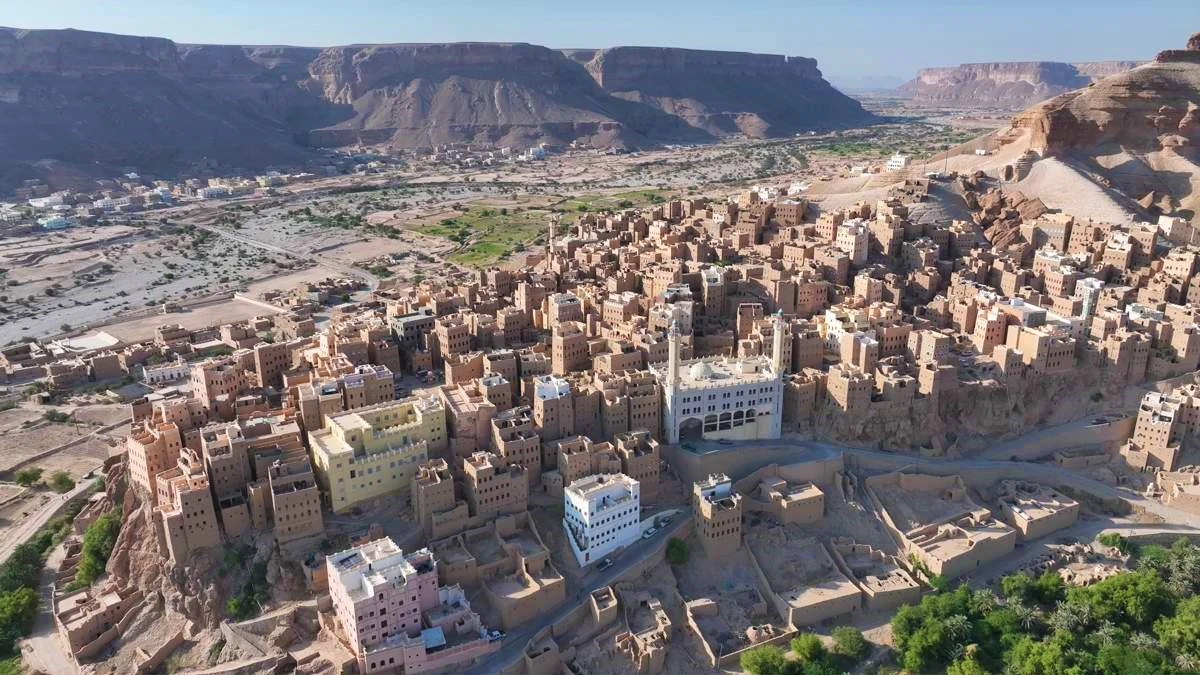
Camping is one of the best ways to experience Socotra.
Many of the island’s most beautiful places are far from Hadibo and the main hotels. Detwah Lagoon, Arher Beach, Dihamri Marine Protected Area and Aomak Beach are easier to enjoy when travelers stay close to the landscape instead of driving back to town every evening.
A Socotra camping tour is not a luxury resort experience, but it should also not feel like unsupported wild camping. With the right operator, tents, meals, drinking water, transport, guide support, portable toilets, portable showers and camp logistics are arranged as part of the tour.
This short Socotra camping guide explains what to expect before joining a remote island itinerary
Why Choose Camping in Socotra?
Camping in Socotra gives travelers more time in the island’s strongest natural locations.
Instead of returning to Hadibo after every excursion, travelers can sleep near beaches, lagoons, dunes, marine areas and remote landscapes. This reduces daily driving and allows better sunrise, sunset and evening experiences.
Camping is especially useful at Detwah Lagoon, Arher Beach and Dihamri, where the location itself is part of the journey. For photographers, camping also helps because the best light often comes early in the morning or late in the afternoon.
Where Do Travelers Camp in Socotra?
Exact camp locations depend on the route, season, weather and local conditions.
Common camping areas may include Detwah Lagoon, Arher Beach, Dihamri Marine Protected Area, Aomak Beach or selected remote sites along the itinerary.
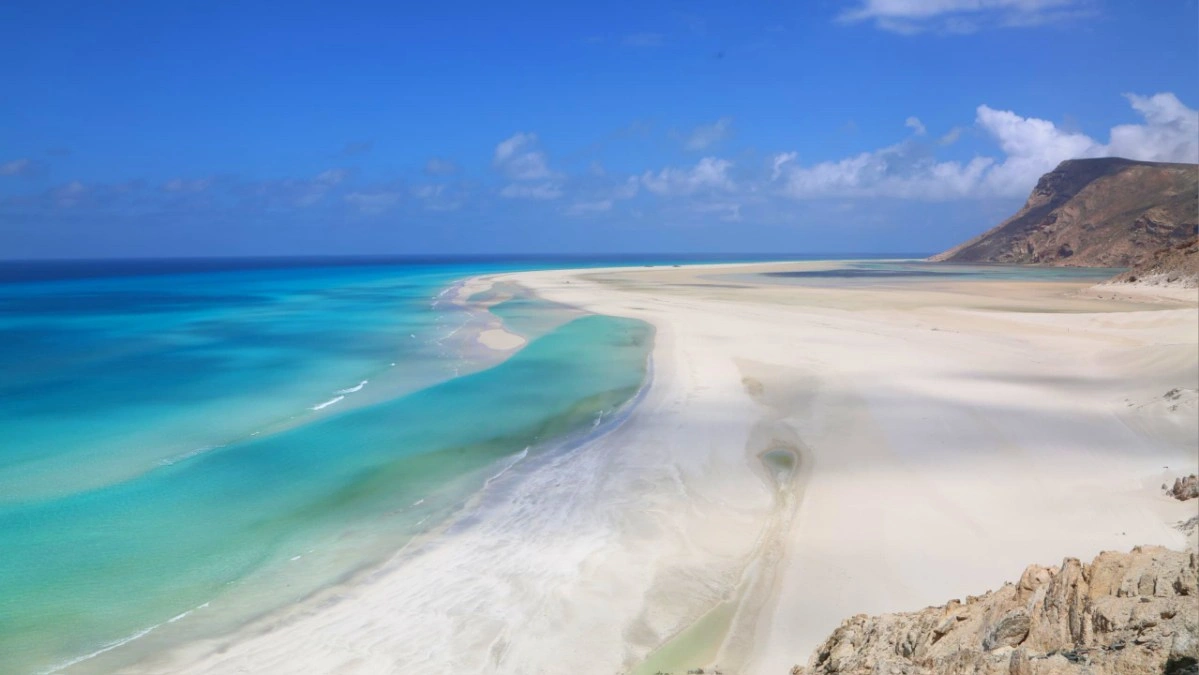
Detwah is known for its white sandbank, turquoise water and mountain backdrop.
Arher is one of Socotra’s most dramatic camping locations, with huge white dunes descending toward the beach.
Dihamri is useful for travelers interested in snorkeling, scuba diving and Socotra’s marine environment.
The final camping route should always be planned by the local team according to weather, road access and responsible campsite use.
Read our blog best places to visit in Socotra
What Are the Tents Like?

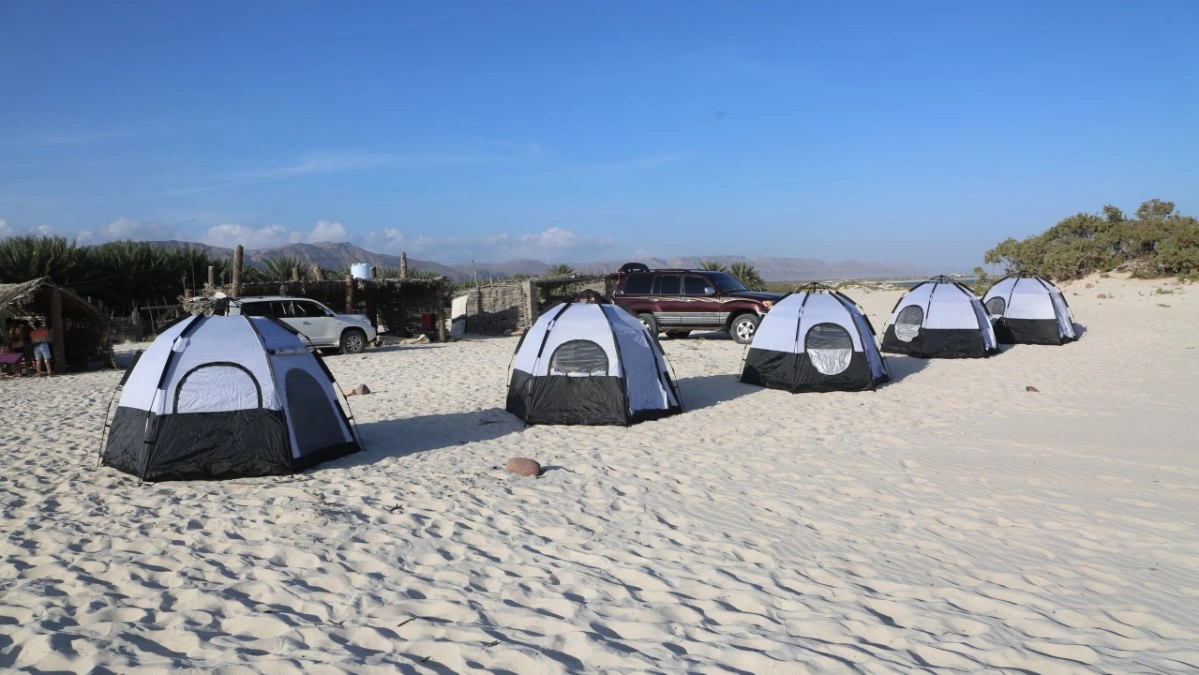
On a properly arranged Socotra camping tour, tents are provided as part of the camp setup.
Travelers should expect a simple outdoor camping experience, not a hotel room. Tents are practical and designed for sleeping during a mobile island route.
Tour staff usually help set up and move the camp as the itinerary changes from one region to another. This is important because Socotra tours normally move across the island rather than staying in one campsite for the full trip.
Toilets and Showers on Socotra Camping Tours
Toilets and showers are one of the biggest concerns for travelers considering camping in Socotra.
On TourYemen Socotra camping tours, portable toilets and portable showers are provided throughout the tour, including remote campsites.
This makes the camping experience more comfortable than basic wild camping. However, travelers should still expect simple outdoor arrangements and careful water use.
Showers are practical and basic. They are meant for washing after beach days, hikes and dusty drives, not for long hotel-style showers.
Travelers should bring a quick-dry towel, personal toiletries, biodegradable wet wipes and any personal hygiene items they need.
Meals, Water, Charging and Starlink
Meals are usually prepared by the local team.
Travelers can expect simple, fresh and filling food rather than restaurant-style dining every night. Meals may include rice, pasta, fish, chicken, vegetables, bread, eggs, fruit, tea and coffee, depending on availability and the day’s route.
Drinking water is provided during the tour, and travelers should carry a refillable bottle.
Socotra is remote, so normal mobile coverage should not be expected everywhere. On TourYemen Socotra camping tours, Starlink internet is available at camps and in vehicles. It is useful for basic communication, although connection quality can vary by location, weather and power availability.
Charging is limited, so travelers should bring a power bank. Photographers should carry extra camera batteries and memory cards.
Camping Tour or Hotel-Based Tour?
Both camping and hotel-based Socotra tours can work, but they offer different experiences.
A camping tour gives better access to remote landscapes and reduces long return drives. It works well for travelers who want to stay close to beaches, dunes, lagoons and protected areas.
A hotel-based tour offers more comfort, private rooms and regular bathroom facilities. However, many of Socotra’s best attractions are far from Hadibo, so a hotel-based route can involve more driving.
A mixed itinerary can be a good balance, with some nights camping near remote attractions and other nights in a hotel for extra comfort.
What to Pack for Socotra Camping
Packing for Socotra should be practical and light.
Useful items include comfortable walking shoes, sandals, lightweight clothing, sun protection, sunglasses, a hat, swimwear, a quick-dry towel, personal toiletries, wet wipes, a headlamp, a power bank, a reusable water bottle and personal medication.
A light jacket is useful for cooler evenings or windy highland areas.
Travelers should avoid overpacking because vehicle space is limited and the camp moves during the journey.
Is Socotra Camping Suitable for Everyone?
Socotra camping is suitable for travelers who are comfortable with simple outdoor conditions.
It works well for nature lovers, photographers, adventurous travelers and people who want to experience the island beyond town-based accommodation.
It may not be suitable for travelers who require hotel-level bathrooms every night, air conditioning, full privacy, luxury bedding or easy access to shops and medical facilities.
The experience is remote, but it should be organized. The key is choosing a tour with reliable vehicles, experienced local staff, meals, water, toilets, showers and clear communication before arrival.
Responsible Camping in Socotra
Socotra’s landscapes are environmentally sensitive.
Campsites should be left clean. Waste should be collected and carried away, not buried or left near beaches, valleys or protected areas.
Travelers should avoid damaging plants, collecting shells or stones, disturbing wildlife or walking across fragile vegetation.
In marine areas, snorkelers and divers should avoid touching coral or standing on reef surfaces.
Responsible camping helps protect Socotra and keeps the island beautiful for local communities and future travelers.
Planning a Socotra Camping Tour with TourYemen
A Socotra camping tour is the best choice for travelers who want to stay close to the island’s remote natural landscapes.
TourYemen arranges Socotra camping tours with local guides, four-wheel-drive transport, meals, drinking water, tents, portable toilets, portable showers, Starlink access and practical route planning.
Camping can be arranged as part of a group tour or private tour. Travelers who prefer more comfort can also choose a hotel-based or mixed itinerary depending on the final program.
Contact TourYemen to plan a Socotra camping tour that gives you more time near the island’s beaches, dunes, lagoons, highlands and protected areas.